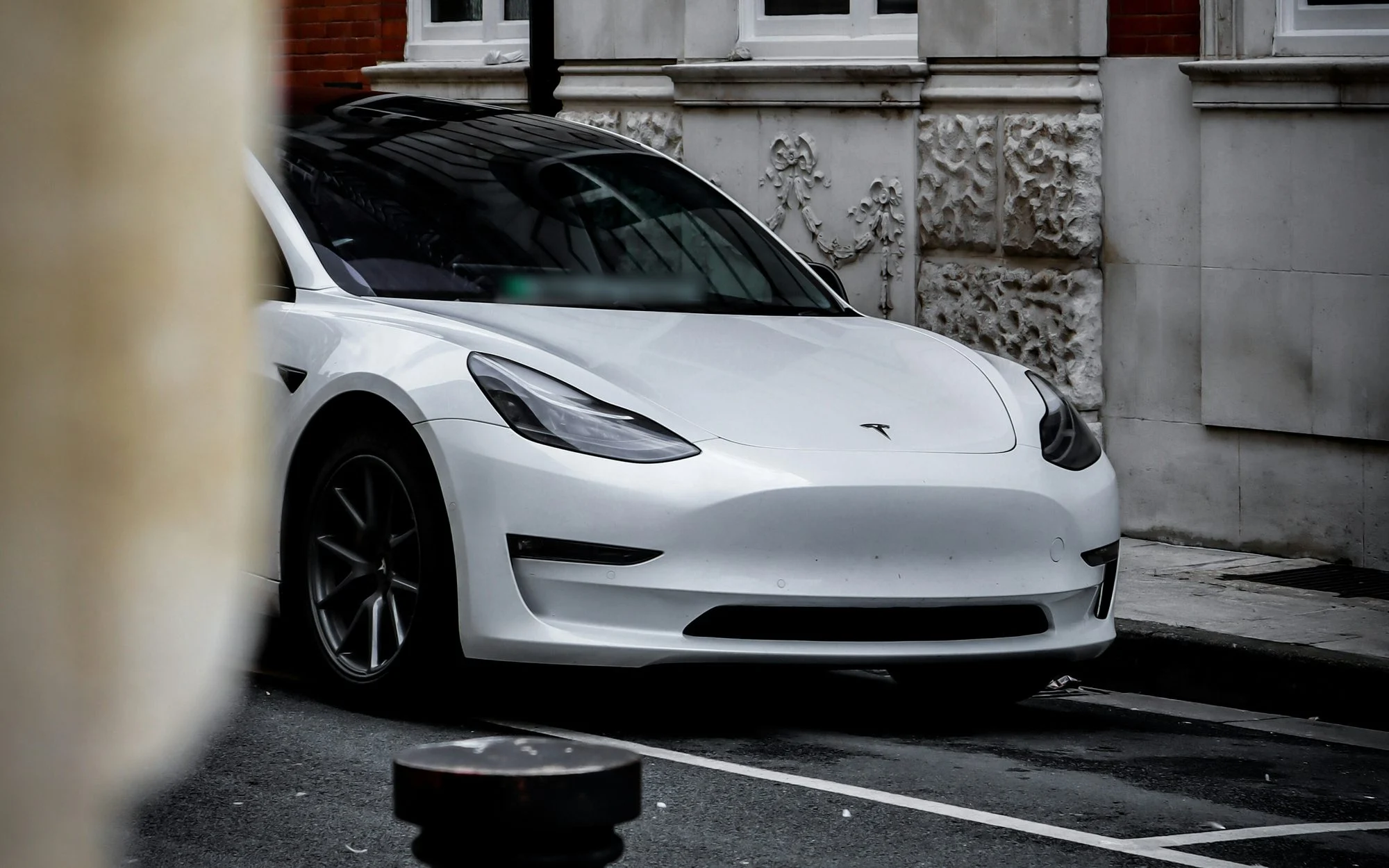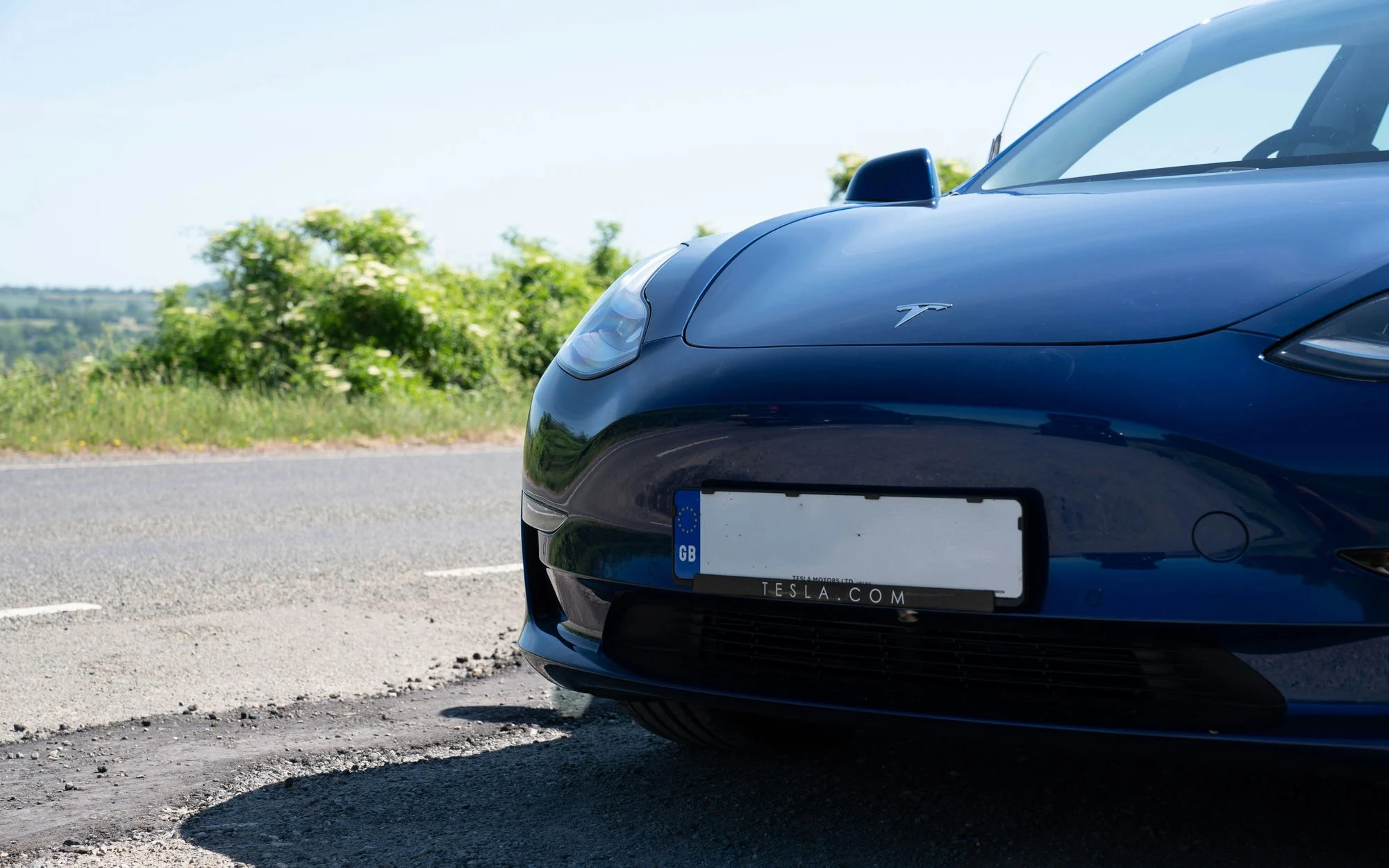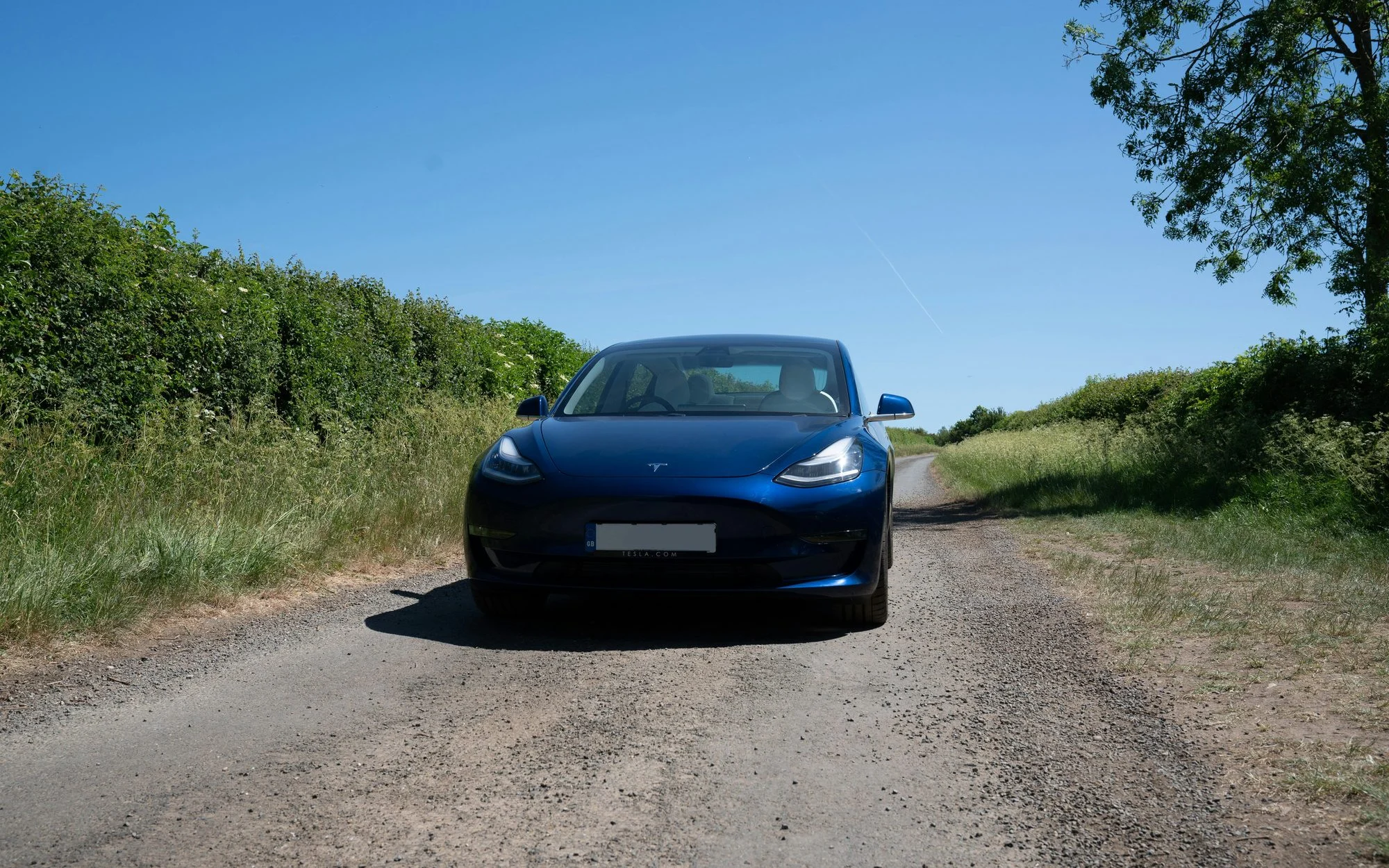
At half past eleven last night I let the dog out for its last lap of the garden. While it inspected the hedge, the zappi by the back door lit up, which meant Octopus had decided the Model 3 could start charging. Nobody else in the house knew or cared. The dog came back in and I went to bed.
People thinking about a Tesla tend to ask me about the Yorkshire runs, winter range and Superchargers. The question I'd ask first is what an ordinary weekday looks like, because that's most of the year. So I wrote down a Tuesday.
In short, our 2019 Model 3 does a little under 30 miles on a school day. It's plugged in when it gets home and costs about 60p to fill back up overnight, as of October 2026. The only person in the house who thinks about charging is me.
School gate, then the multi-storey
The car is warm and at 90% when we leave at ten to eight. The dog comes on the school run, in the boot, where it gets admired through the back window by a queue of small children at the gate. The school is about three miles away. The boys spend the trip arguing about whose turn it is to choose the music, and by the time it's settled we're there.
On the way back I sometimes stop for milk with the dog still in the car. Dog Mode keeps the cabin at the temperature I've set and shows it on the big screen, so anyone walking past can see the dog is fine. Tesla added it in February 2019, a few months before we collected ours (The Drive). It's for five minutes in a supermarket car park, not an afternoon. The dog uses the five minutes to steam up the rear window.
By twenty past eight the car is back on the drive and my partner takes it to work, about eleven miles each way, mostly on A-roads. The first thing my partner does is switch the stopping mode to Creep, which makes the multi-storey car park at work easier, and the first thing I do the next morning is switch it back to Hold. The setting doesn't follow driver profiles, so we've done this every weekday for seven years. Neither of us has suggested the other one changes.
The car comes home at about six with around 80% left. My partner plugs it in on the way to the front door. In 2019 that took a fortnight to become a habit, and now it's as automatic as locking up.
About 60p a day
We're on Intelligent Octopus Go. We've told Octopus when the car needs to be ready and how full we want it, and it decides when to charge within the hours the car is plugged in, mostly in the cheap window from 23:30 to 05:30. The cheap rate is 7.6p/kWh (Octopus Energy, as of October 2026). If Octopus schedules some of the charge outside that window, the whole house gets the cheap rate for those slots too. I've never managed to time the tumble dryer to it.
A normal day's driving uses about 7.5 kWh in mild weather, roughly a tenth of the battery. With a bit lost in charging, putting it back costs about 60p. In January it's nearer 90p, because short trips in the cold are thirsty and Schedule warms the car on the zappi before the school run. How much winter takes, and what we do about it, is in frosty school runs in a Model 3 without a heat pump.
Weekdays are most of our miles and well under half of what the car costs us in electricity. Home charging comes to about £180 a year, and Supercharging on the Yorkshire runs and camping trips costs about the same again. The full sums, against the diesel Land Rover we sold this summer, are in running our Model 3 for a year, and the stops themselves are in the Superchargers we use between the Cotswolds and Yorkshire.
If your weekdays look like ours, you don't need the longest-range car Tesla sells, and ex-demo cars come up now and then in Tesla's new Model 3 stock, through our referral link(referral link).
This is our last month of the Octopus routine. We move to EDF in November, and I'll write up why, and what it does to the 60p, once the first bill has arrived.
Where the sunshine goes on a weekday
On a sunny Tuesday the solar panels do a lot of work and the car sees none of it. The 3.5 kWp array runs the house from mid-morning, our 5 kWh battery is full by lunchtime, and the rest is exported, because the car is eleven miles away in a multi-storey. The zappi's Eco+ mode only charges from surplus solar that would otherwise be exported (myenergi), so the Model 3 gets its free miles at weekends and in the school holidays. The dog spends those afternoons asleep in the patch of sun by the back door. Of everything in the house, it makes the best use of the solar.
Whether a bigger battery would catch the weekday sunshine is a question I've already spent a week on, and the answer is in what a Powerwall would add to our solar and small battery. For us it wouldn't add enough.
The owners we do know
We've never joined an owners' club. Saturday mornings belong to the boys' football, and most free weekends go on Yorkshire or a campsite, so a Sunday meet in a car park somewhere has never made it onto the calendar.
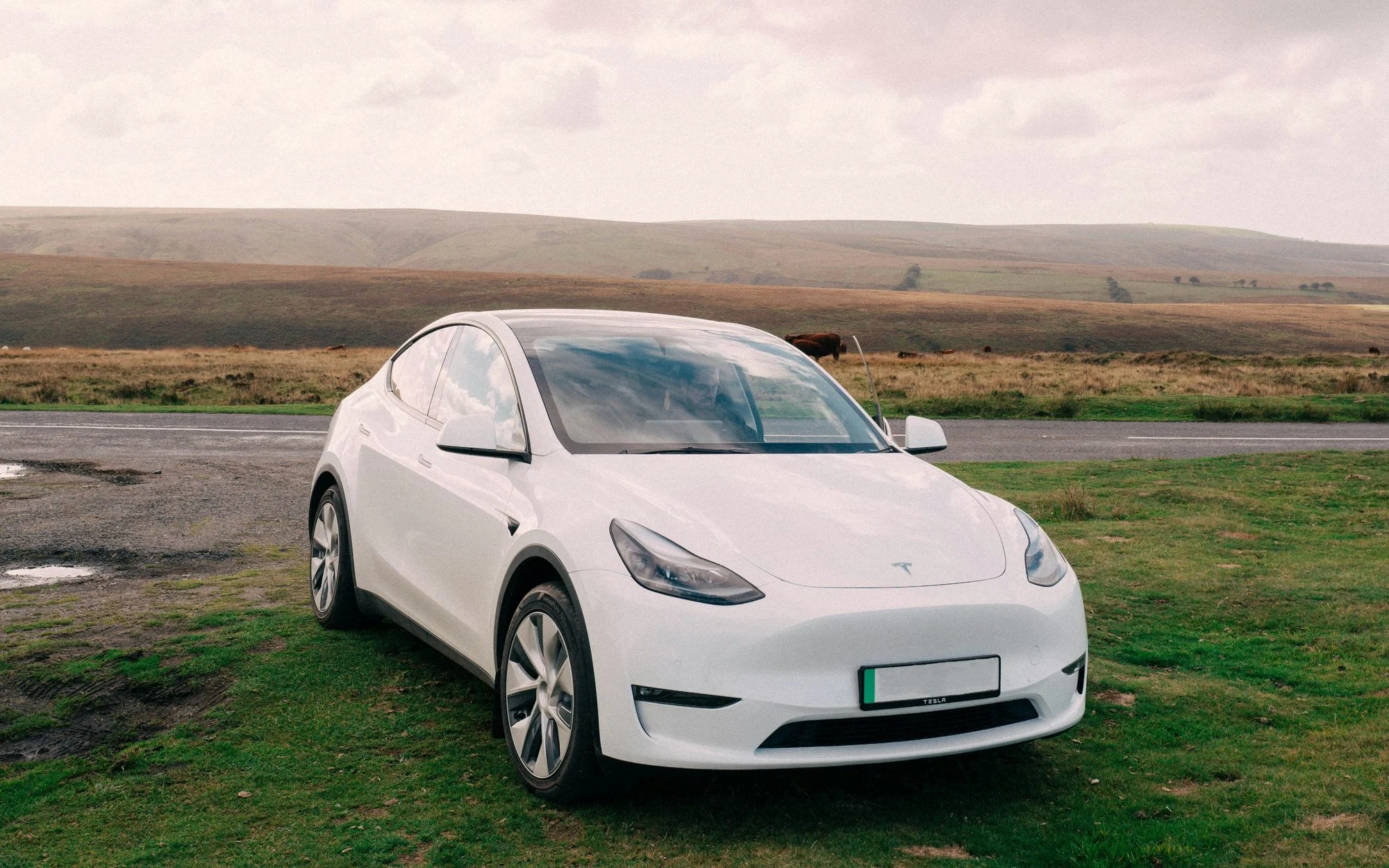
The nearest thing we have to a Tesla owners club in the UK is our friends in Yorkshire, who have a Powerwall and an app they like to show people. There's also a dad at the school gate with a white Model Y, and we nod to each other in the way people do when they drive the same car. He once asked me about the zappi and got a longer answer than he'd planned for.
If you do want a club, the one Tesla officially recognises here is Tesla Owners UK. It's a volunteer-run, not-for-profit club. Joining is free, and there's a £40-a-year supporter membership for anyone who wants to chip in (Tesla Owners UK, as of October 2026). Tesla Motors Club, despite its name, is an independent online forum that started in 2006 (TMC). Its UK threads are where I end up when the car does something odd, usually late at night, usually to find someone else had the same thing in 2021.
The dull days are the point
Most of the life of a Tesla in the UK looks like this Tuesday. Two short trips, a dog in the boot, a car plugged in by the back door and a charge that happens while we're asleep. Before 2019 the Discovery Sport took us to a petrol station most weeks, and the boys knew which forecourt sold the best sweets. The Model 3 has never needed a trip anywhere to be ready for the morning.
If you're weighing up a Tesla, think less about the one long trip a year and more about your ordinary Tuesday. If you can plug in at home, the weekday miles cost very little and take none of your time. Ours stays on school-run and commute duty when the Model Y arrives in February, and the elder boy has already claimed it for when he's old enough.
If this would be your first Tesla, ordering a new Model 3 or Model Y through our referral link(referral link) gets you 650 free Supercharging miles (as of October 2026), which on our car covers about seven stops at Woodall. Use the link before you place the order, because Tesla can't add it afterwards.