Last Monday was the first cold morning of the autumn. It was 2°C at ten to eight, and I hadn't switched the Model 3's Schedule back on since March, so the boys climbed into a car exactly as cold as the drive. The elder boy asked, in the voice of someone who has suffered a great deal, whether the heating was broken. The dog has a fur coat and kept out of it.
This will be the Model 3's eighth winter with us, and a car this old, with no heat pump, feels the cold more than a new one. So with the clocks about to go back, I've written down what winter does to our car and what we do about it.
In short, on the motorway in January our Model 3 goes about a fifth less far on a charge than it does in summer, and short trips from a cold start lose more. Warming the car while it's plugged in wins back most of what the school run loses. A rinse underneath and a yearly brake service deal with the salt.
What the cold does to a 2019 Model 3
Tesla's own cold-weather advice says the car needs more energy in winter, for driving and for heating both the cabin and the battery (Tesla Model 3 owner's manual, as of October 2026). Ours has it harder than most. Model 3s built before the 2021 update have no heat pump, so they warm the cabin with a resistive heater, which is more or less a very large hairdryer. In one owner's comparison in late 2020, a 2019 Model 3 needed about 2,170 watts to hold the cabin at 21°C, and a 2021 car with a heat pump about 735 (Electrek, December 2020).
In summer we average about 4 miles per kWh. On a frosty school run from a cold start, the first few miles come in under 2, because most of the energy is going into warming everything up. On the motorway in January, once the car is warm, we see about 3, which on our battery means roughly 200 miles from a full charge against 250 or so in summer.
EV Database's estimates for our model, when new, show the same pattern, with 205 miles on the motorway at -10°C with the heating on, against 265 in mild weather (EV Database, as of October 2026). Our winters are rarely that cold, but our battery also shows about 10% less range than it did in 2019.
The range figure on the screen doesn't allow for the weather. In January I trust the projection in the car's Energy app, which is based on how the last few miles went.
If winter range is what puts you off a Tesla, it's much less of a problem in a newer one. The Model Y had a heat pump from launch, and the Model 3 got one in its 2021 update (Electrek). The Model Y we've ordered has one, and so do the ex-demo cars that turn up in Tesla's new Model 3 and Model Y stock, through our referral link(referral link).
A warm car at ten to eight
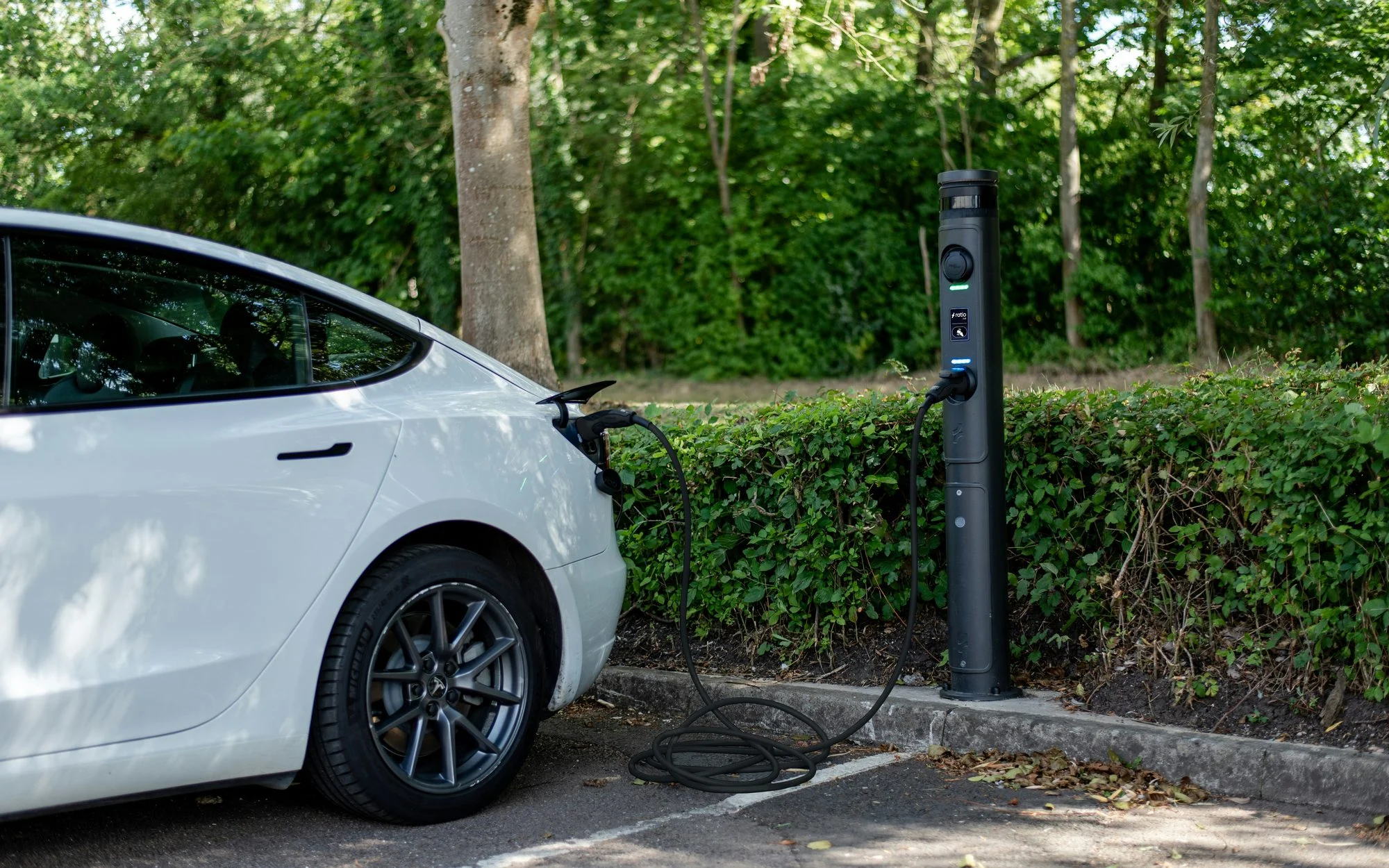
The fix for the school run is to warm the car while it's still on the drive. Tesla's Schedule setting takes a departure time and works out when to start heating the cabin and the battery so both are ready when you leave (Tesla Model 3 owner's manual). When the car is plugged in, preconditioning runs on power from the charger rather than the battery (Tesla support, as of October 2026), so we leave it on the zappi until we go. Ours is now set for 7:50 on weekdays, and it stays that way until spring.
On frosty mornings I also press Defrost Car in the app, which melts ice on the windscreen, windows, mirrors and charge port. Tesla warns that door handles, windows, mirrors and wipers can freeze in place, and a Model 3's flush handles and frameless windows are exactly the sort of thing that does. One January my partner went to work through the passenger door. Meanwhile our neighbour scrapes their windscreen with a loyalty card, and the Highway Code is on the neighbour's side. Before you set off, you must clear all snow and ice from every window and make sure your lights and number plates are clean (rule 229). On a Tesla I'd add the cameras on the door pillars and behind the windscreen, because the car complains when it can't see.
Tesla also says the seat heaters use less energy than the cabin heater, so we keep the cabin a little cooler and the boys have their seats on. The rear seat heaters are controlled from the front screen, which gives me a lot of bargaining power before eight in the morning.
We've never fitted winter tyres. Snow in the Cotswolds rarely lasts more than a day or two, and when it settles the school usually shuts anyway.
January on the M1
The Yorkshire run is a little over 200 miles, so on a warm day the car could just about do it in one go, and in January it can't. We charge to 100% the night before, set Schedule for the time we're leaving so the battery starts warm, and plan to stop at Woodall.
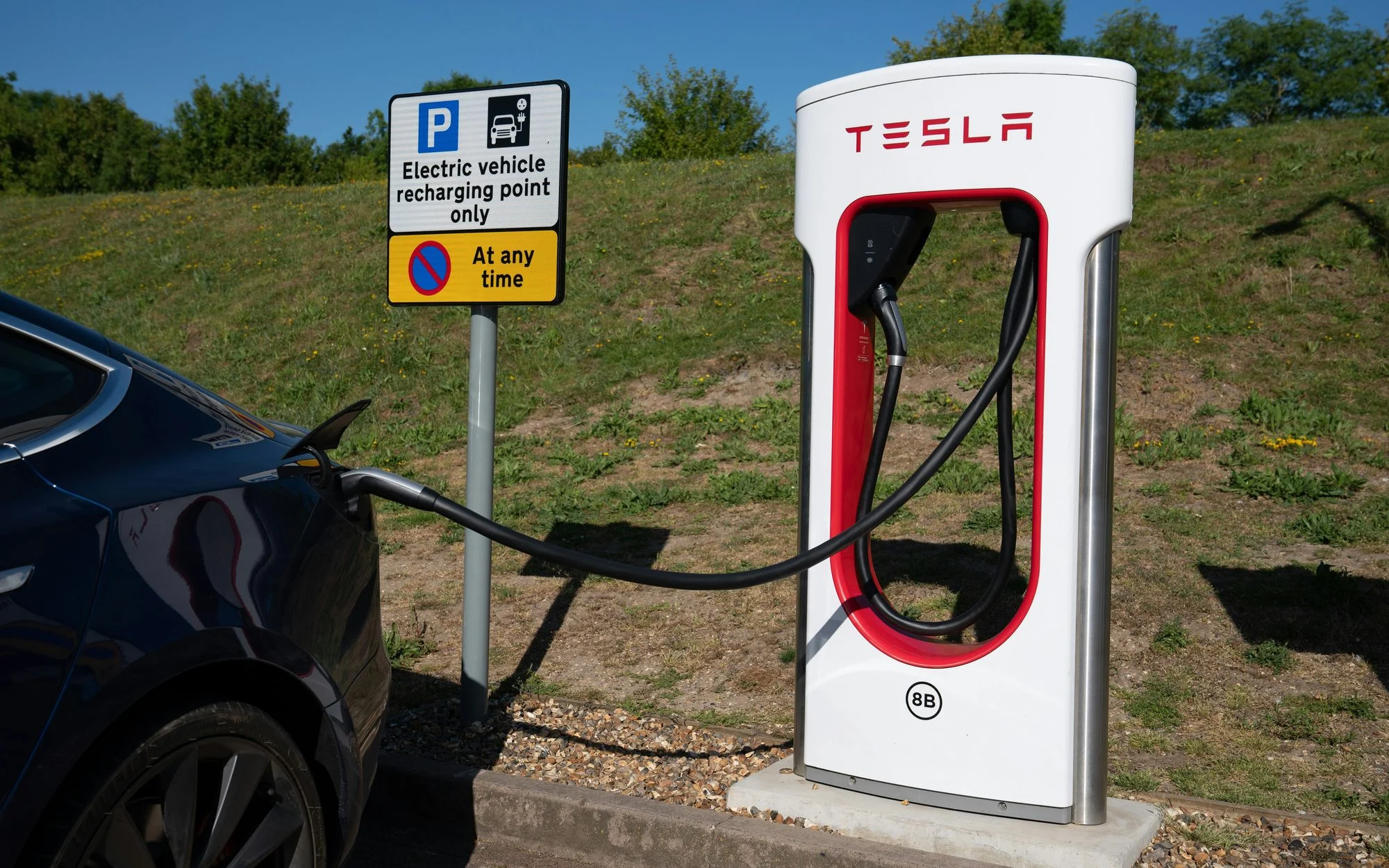
A Tesla warms its battery on the way to a Supercharger if you navigate there, and Tesla suggests doing that for at least 30 to 45 minutes before you arrive (Tesla Model 3 owner's manual). We put Woodall in the satnav before we leave the Cotswolds. In our first winter I didn't, and plugged a cold battery in at Woodall and watched it charge at a fraction of its usual speed while the boys went round the sweets twice.
Our lowest ever arrival at our usual Supercharger at Woodall was 6%, on a January night with rain all the way up the M1, a headwind, the boys asking for the heating "on hotter" and me deciding we didn't need to stop at Leicester. My partner still brings it up. In my experience a wet road and a headwind cost more than the cold does on its own, so on a filthy night I stop at Fosse Park without being asked.
Salt on the lanes
From November the gritters do our lanes most nights that are heading below freezing, and by February the Model 3 is the colour of a digestive biscuit. Tesla's manual says road salt should be removed straight away, and when roads have been salted, to rinse all traces of it from the underside, the wheel arches and the brakes (Tesla Model 3 owner's manual, as of October 2026). Every other Sunday I go round with the hose, the elder boy in charge of the wheel arches and the younger one in charge of getting wet. The dog supervises from the doorstep.
The brakes need more than a rinse. A Tesla hardly uses them, so salt and rust have time to settle on the discs, and Tesla recommends cleaning and lubricating the calipers every year or 12,500 miles where roads are salted (Tesla maintenance intervals, as of October 2026). Ours earned an advisory for rusty rear discs at the 2025 MOT. That story, and the weekly habit that fixed it, is in seven years of one-pedal driving, along with why regen is limited when the battery is cold.
Ready for the eighth winter
This month's jobs are done. Schedule is back on for weekday mornings, the hose is by the front door and the caliper service is booked for the new year.
A British winter is nowhere near enough to defeat a Tesla, even one old enough to have no heat pump. It costs us about a fifth of our motorway range and a few extra minutes at Woodall, and in return the boys get into a warm car every morning while the neighbour scrapes. From February the Model Y takes over the Yorkshire runs, with its heat pump, and I'm curious how much of that fifth it wins back. I'll report after its first frost.
If this would be your first Tesla, ordering a new Model 3 or Model Y through our referral link(referral link) gets you 650 free Supercharging miles (as of October 2026), which on our car is about seven stops at Woodall. Use the link before you place the order, because Tesla can't add it afterwards.