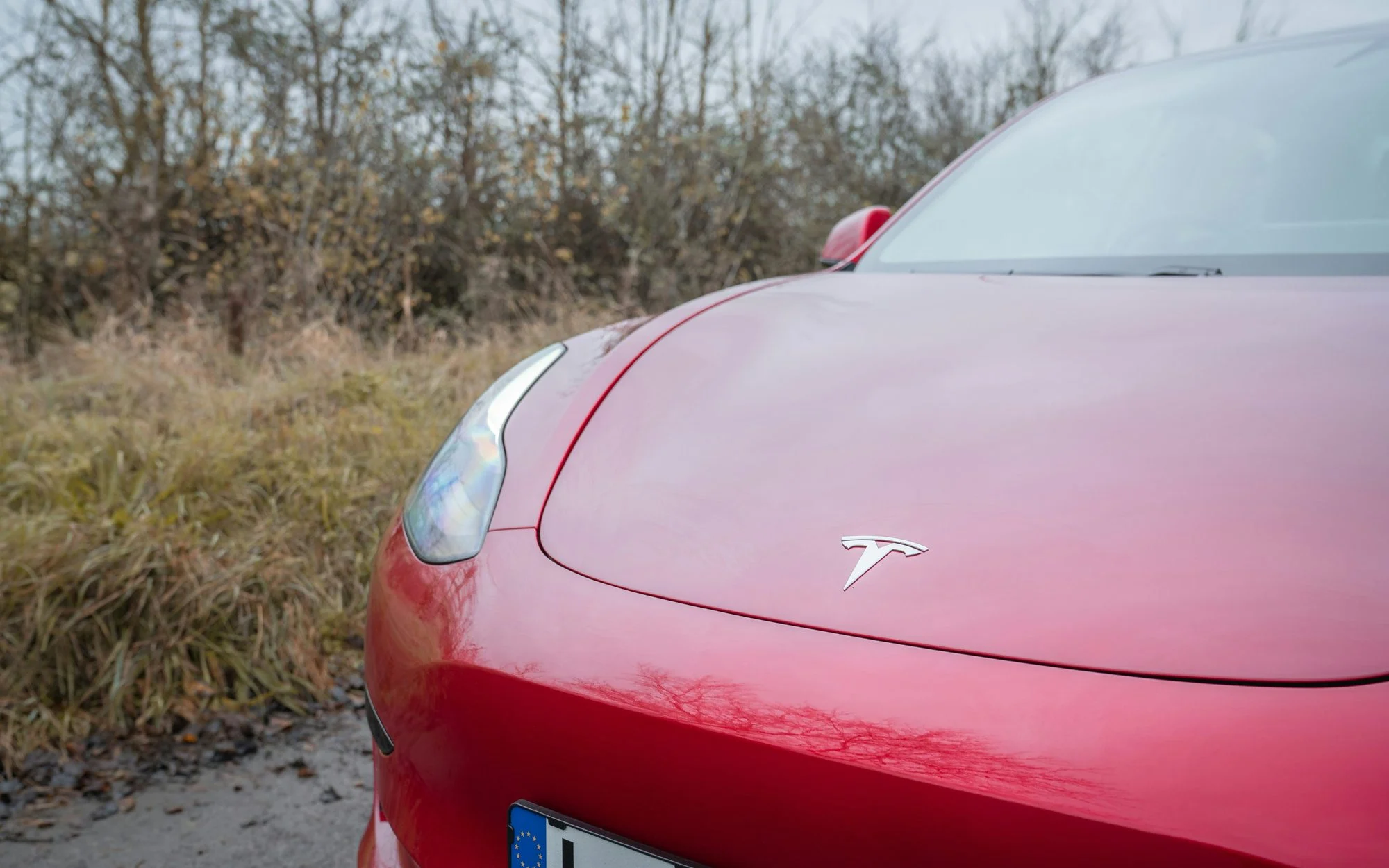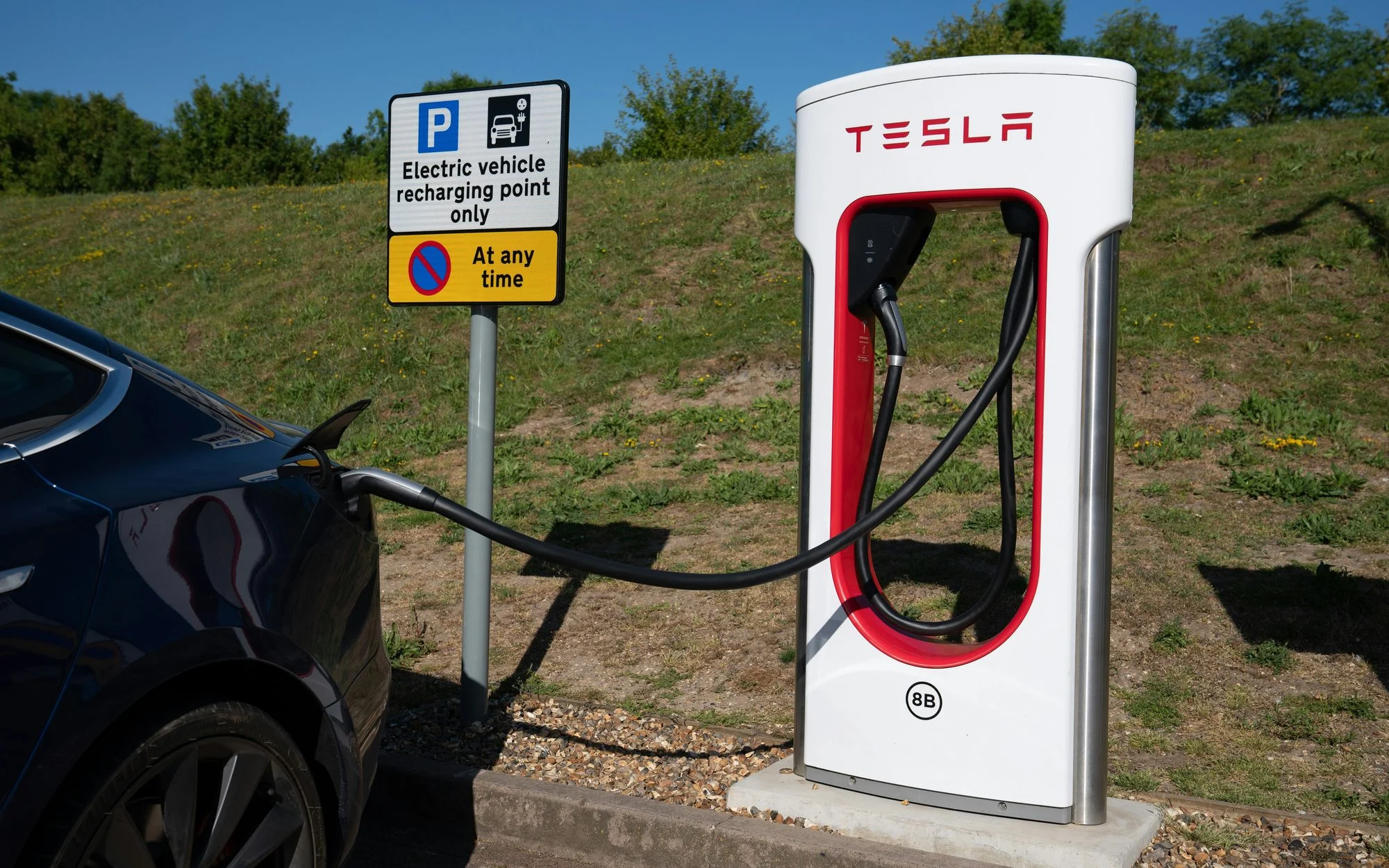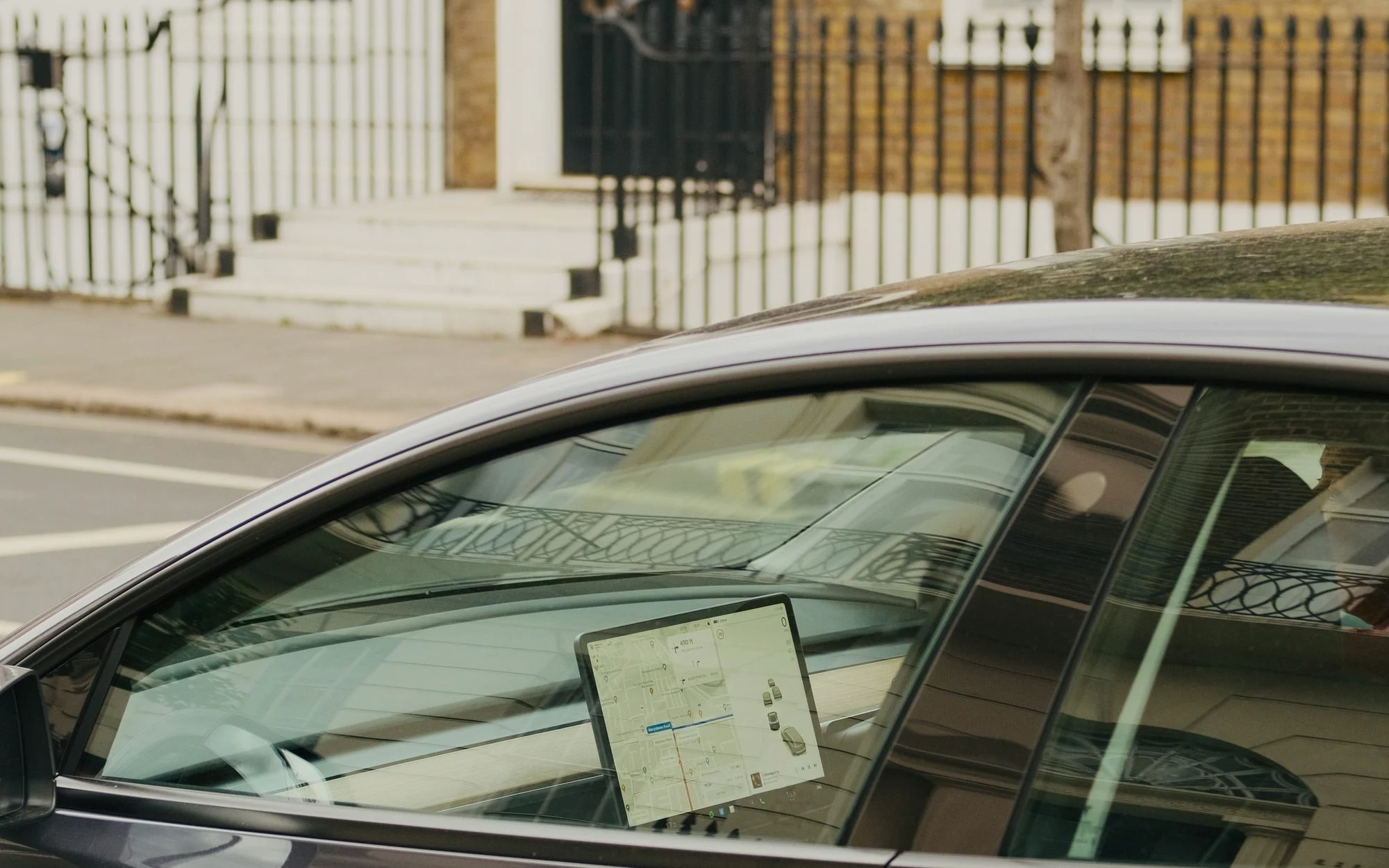
We'd been on the Supercharger at Woodall for about ten minutes on a Sunday in May, and the boys had already been through the sweets. The elder one looked at the map on the screen and pointed out that the M1 was exactly the same as last time. My partner zoomed out, put a finger on the green patch west of Chesterfield and said "Bakewell". We came off at the next junction and got home about two hours after the car had planned, with a Bakewell pudding in the frunk.
That's how we come home from Yorkshire now whenever nobody has school the next day. Our usual route and charging stops are in the Superchargers we use between the Cotswolds and Yorkshire. This post is about the slower ways round: the Peak District on the way home, Exmoor and the Brecon Beacons on the way to the campsite, and the long Scottish loop we're saving for the Model Y. The short version is that scenic roads are easy in a Tesla as long as you charge before you leave the main roads, because out in the hills the chargers are slower and further apart.
Off the M1 at junction 29
Heading south, Woodall's Superchargers are on our side of the motorway, and junction 29 is a few miles further on. From there we cut through Chesterfield and out on the A619 to Baslow, where the road drops to the River Derwent at the edge of the Chatsworth estate. We've never got much further than the riverbank there, because the dog regards the deer park as a personal challenge.
Bakewell is a few miles on, and it's where we stop for lunch and the pudding. The town makes a point of the difference between its pudding and a Bakewell tart. The boys call it a tart anyway, loudly, in the shop.
From Bakewell the B5055 climbs past Monyash onto the limestone plateau and meets the A515, the road from Buxton to Ashbourne. A little way south is Parsley Hay, where two old railway lines, now the High Peak Trail and the Tissington Trail, meet. The National Park hires out bikes there, including children's bikes, and the Tissington Trail runs 13 traffic-free miles down to Ashbourne (Peak District National Park). Until the Model Y arrives with a tow bar and a bike rack, the boys hire bikes and race each other along it while the dog and I lose.
After Ashbourne the A515 carries on south to Lichfield, and from there it's main roads home. The Peak District became the UK's first national park on 17 April 1951 (Wikipedia), and I'd happily argue it's still the best way to spend the last afternoon of a half-term.
Charging before the hills
The detour adds about 20 miles and a lot more climbing. On a normal run home we only add enough at Woodall to get back, but before the Peaks we stay another ten minutes or so and leave at about 80%. The hills cost more than the motorway, and the charging up there is slow.
In January 2024 the National Park opened twin 7 kW chargers in its car parks at Parsley Hay and Millers Dale, paid for by BMW (Electrifying.com). An hour on one while the boys are on the bikes adds roughly 25 miles. That's a nice extra but not a plan, and on a sunny bank holiday I wouldn't count on finding a free one.
The car's range estimate allows for the climbs, and on this route it has been right to within a few per cent. The energy graph shows the cost going up the hill out of Bakewell and some of it coming back on the long run down into Ashbourne. Overall the extra miles cost us about £3 at Woodall's daytime price of 48p/kWh (as of 7 October 2026). The pudding costs more.
For anywhere off Tesla's network, I check Zapmap as well as the car. When we're staying somewhere rural, I ask about charging when I book, and anything the B&B can offer overnight is a bonus. The rule I'd pass on is to treat the last Supercharger before the hills as your fuel stop and fill up there, even if the car says you don't need to.
Exmoor and the Beacons on the way to camp
Our camping trips have their own long way round. When we're heading for north Cornwall with time to spare, we charge at Gordano on the M5 and leave the motorway at Bridgwater for the A39, which runs along the top of Somerset and Devon. Porlock Hill climbs about 400 metres in under two miles, with gradients of up to 1 in 4 and hairpin bends, and there's a gentler toll road for anyone who'd rather not (Wikipedia). The Model 3 went up the main road without fuss. Countisbury Hill brings you back down the same height into Lynmouth, and the battery went up by a percent on the way down. The boys cheered as if someone had scored.
Past Barnstaple the A39 becomes the Atlantic Highway, through Bideford, Camelford and Wadebridge, until it joins the A30 near Fraddon. The Supercharger at Kingsley Village is just off the road there, one of the Cornish stops in our camping post. Exmoor is also where the dog first met a herd of cattle at close quarters and decided to stay in the car.
For Pembrokeshire, the quick way is the M4. The slow way is the A470 north from Merthyr Tydfil, past the reservoirs to the road's highest point at Storey Arms, below Pen y Fan, which at 886 metres is the highest mountain in South Wales (Wikipedia). The national park has called itself Bannau Brycheiniog since 2023 (Bannau Brycheiniog National Park Authority). The boys walked up Pen y Fan from the car park last summer and have described it to everyone since as climbing a mountain. From Brecon the A40 runs west to Carmarthen, where we charge before the last stretch to the campsite.
The North Coast 500, one day
The trip on the list is in Scotland. The North Coast 500 is a 516-mile loop round the north of the Highlands, starting and ending at Inverness Castle (Wikipedia). On the way it crosses the Bealach na Bà to Applecross, a single-track pass that climbs from sea level to 630 metres in about 6 kilometres, with gradients approaching 20%. That's the greatest ascent of any road in the UK (Wikipedia). The boys have watched videos of it and want to go up it. My partner has watched the same videos.
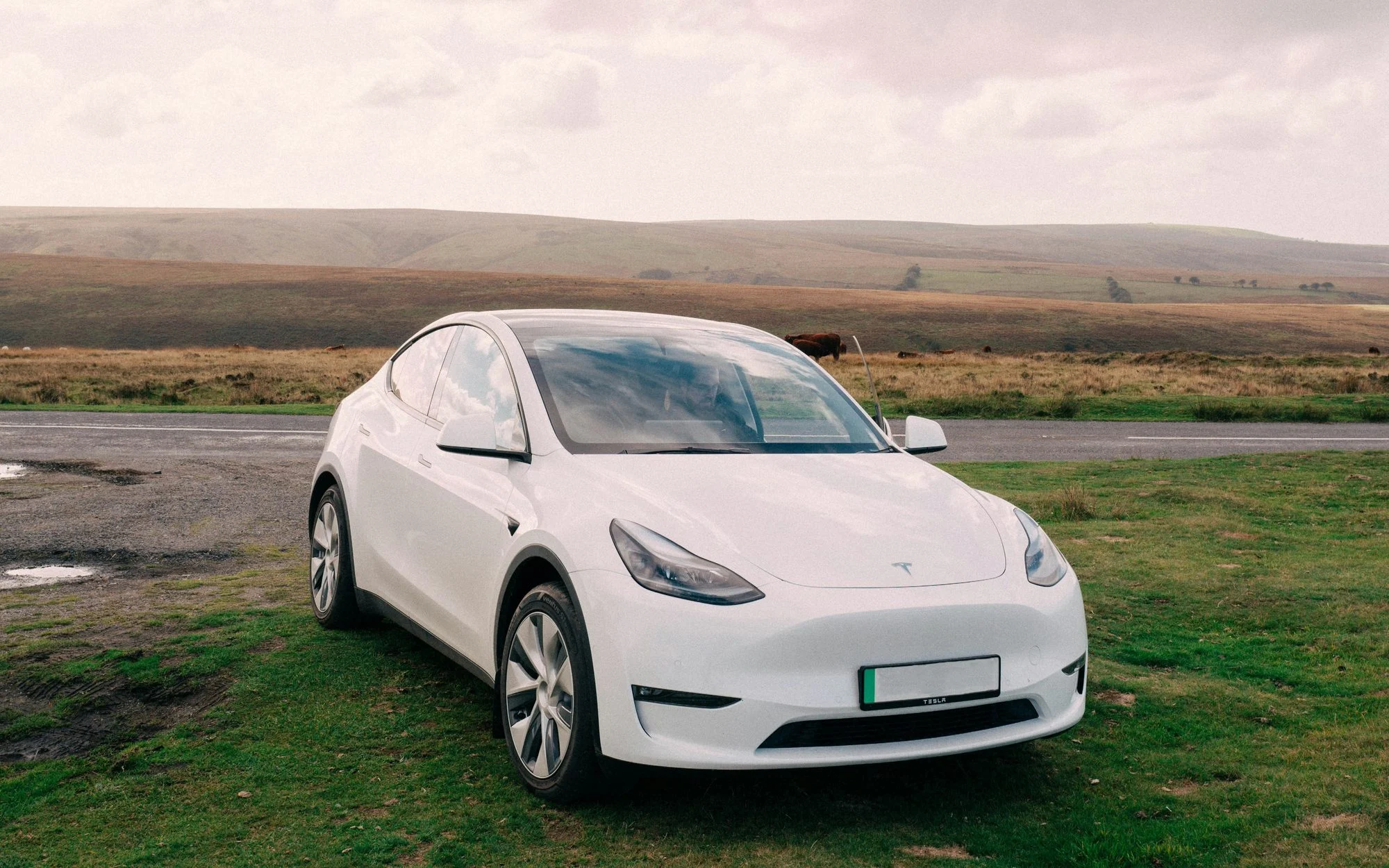
We're planning it for the Model Y, with the tent, in a summer when the boys are old enough to enjoy two days in the car getting there. Much of the charging up there isn't Tesla's, so this is one I'll plan with Zapmap and a spreadsheet, and my partner has already said the spreadsheet stays at home. The Model Y's bigger boot was a large part of why we chose it for trips like this. If you're choosing a car with long trips in mind, you can build a Model Y in Tesla's design studio(referral link) through our referral link and see the price for your spec before you commit.
Worth the extra afternoon
A scenic detour in a Tesla costs us an afternoon and a few pounds of electricity. The planning comes down to filling up at the last Supercharger before the hills and treating anything slower as a bonus. The boys don't remember a single trip up the M1, but they remember the race down the Tissington Trail, and the elder one says he won it.
If this would be your first Tesla, ordering a new Model 3 or Model Y through our referral link(referral link) gets you 650 free Supercharging miles (as of October 2026). That's more than the whole North Coast 500, though the free miles only work at Superchargers that Tesla owns, so up there you'd need to find one to spend them. Use the link before you place the order, because Tesla can't add it afterwards.