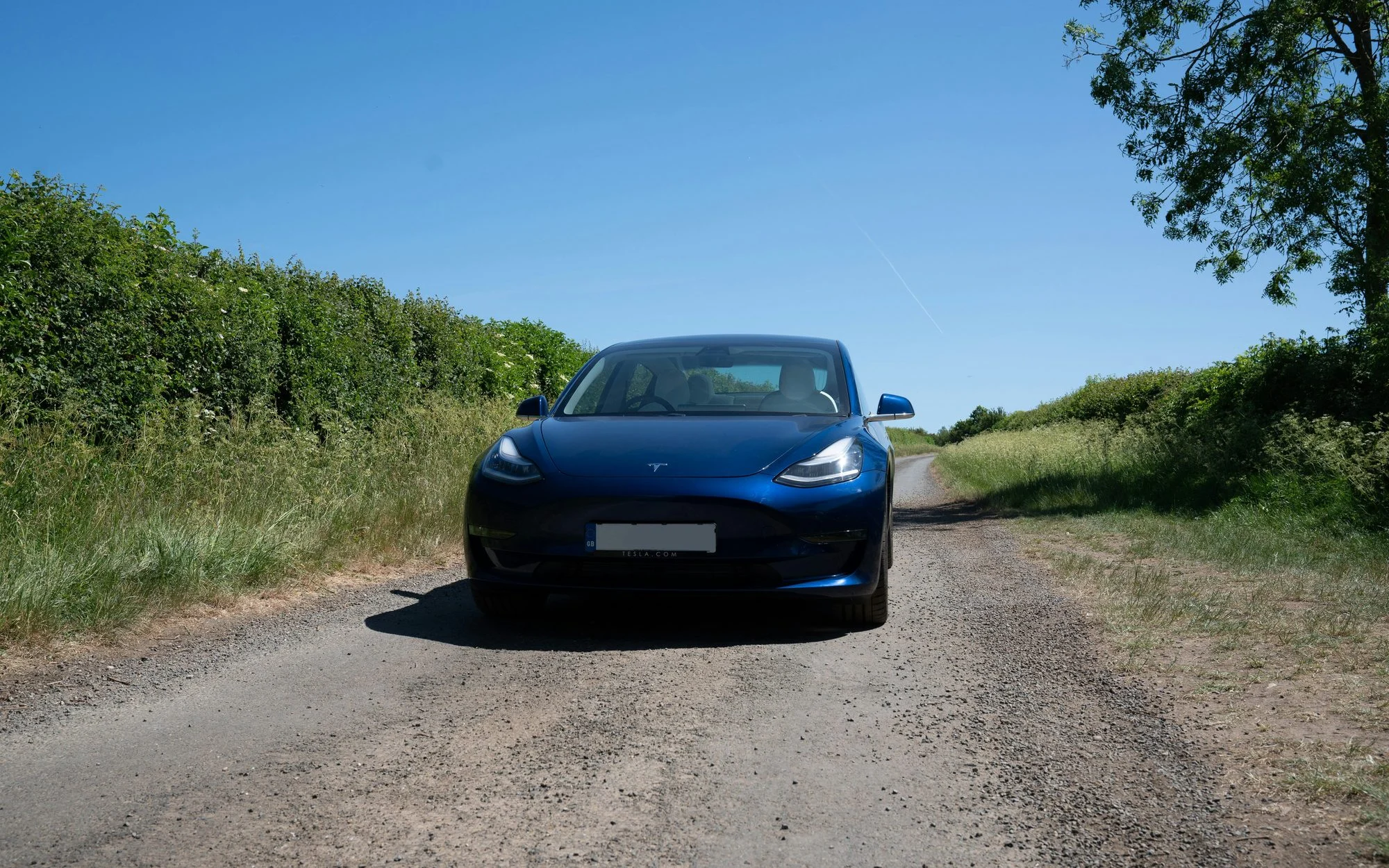
A colleague of my partner's parked a new Model Y two spaces along from our Model 3 in the multi-storey at work last week. It came through the salary sacrifice scheme the office launched in September. My partner came home, dropped the keys in the bowl and said, "That's the third time I've mentioned this scheme." I had a spreadsheet open before the kettle boiled.
There were two questions. Would our Model Y, ordered in our own names for February, have been cheaper through my partner's work? And when our 2019 Model 3 retires from the school run and the commute, should its replacement come that way? The answers turned out to be "probably" and "yes". Salary sacrifice takes the car payment out of your pay before income tax and National Insurance, and an electric car keeps the company car tax small, so for most people with a scheme it's the cheapest way to drive a new Tesla. You give up owning the car and some freedom, and for the Model Y those mattered.
The other ways to pay are in how we're paying for our Model Y.
The sums for a Model Y like ours
The scheme quoted about £600 a month for a Tesla Model Y on salary sacrifice, the same Premium Long Range Rear-Wheel Drive we've ordered, over four years with insurance, servicing and tyres included. It comes off salary before tax, so a basic-rate taxpayer saves 20% income tax and 8% National Insurance on it, and a higher-rate taxpayer saves 40% and 2% (HMRC rates for 2026 to 2027).
In return you pay company car tax, the benefit in kind (BIK), on the car's list price. HMRC taxes a salary sacrifice car with emissions of 75g/km or less under the normal company car rules, not on the salary you gave up (HMRC), and the rate for an electric car is 4% in 2026/27 (HMRC). On a list price of £49,990 that's about £400 a year in tax at basic rate and £800 at higher rate. As a worked example, the same £600 lease looks like this (as of October 2026):
Each month, same £600 lease | Basic-rate taxpayer | Higher-rate taxpayer |
|---|---|---|
Paid from take-home pay | £600 | £600 |
Through salary sacrifice, before company car tax | £432 | £348 |
Company car tax at 4% | £33 | £67 |
Salary sacrifice in total | £465 | £415 |
Which column we're in is a matter between my partner and HMRC. Either way the scheme is about £1,600 to £2,200 a year cheaper than paying for the same lease out of take-home pay. A dealer's personal lease would have its own price, but that's a big gap to close.
Owning isn't free either. Our Model 3 cost £47,900 in 2019 and is worth about £15,000 now, so it has lost about £390 a month, before roughly £63 a month of insurance (the rest is in running our Model 3 for a year). On those numbers the scheme car comes out level or ahead, and it's new.
A Tesla Model 3 on salary sacrifice works the same way with a smaller tax bill. The Model 3 Rear-Wheel Drive is £37,990 (Tesla, as of October 2026), so at 4% the company car tax is about £300 a year at basic rate and £600 at higher rate. If your employer gives you a company car outright instead, the company car tax is all you pay.
Company car tax keeps creeping up
The 4% won't last. The rate for electric cars rises to 5% in 2027/28 (HM Treasury), then 7% in 2028/29 and 9% in 2029/30 (HM Treasury). Nothing is set beyond that. A four-year lease starting next spring would end in the 9% year, when the tax on a £49,990 car is about £75 a month at basic rate and £150 at higher rate. The £465 becomes about £507 and the £415 about £498. Both still beat £600, but the higher-rate taxpayer's head start has mostly gone.
The tax is worked out on the list price including factory options. Pearl White paint adds £1,300 to a Model Y Premium (Tesla, as of October 2026), and on salary sacrifice you'd pay tax on that £1,300 every month of the lease. I'd have the grey.
Why the office is keen
At least two of the Enyaqs in the school car park are on salary sacrifice, and their owners talk about it the way other parents talk about half-term deals.
Employers save money too. They don't pay their 15% National Insurance on the salary you sacrifice, and pay 15% Class 1A National Insurance on the car's taxable value instead (HMRC). On a £600 lease that's about £1,080 a year saved against about £300 paid. My partner's office says its share covers the cost of running the scheme.
The employer chooses the provider. Octopus EV, Tusker, The Electric Car Scheme and Loveelectric are among the bigger names, and each sets its own prices, so the same Model Y can cost noticeably different amounts at two employers. Not everyone can join, because a salary sacrifice can't take your pay below the National Minimum Wage (HMRC).
Leaving the job with the car on the drive
The car is tied to your job for the length of the lease, usually two to four years. What happens if you leave depends on the scheme. Octopus EV says that once you've had the car three months you can hand it back free if you resign, are made redundant or are dismissed, and it covers up to 12 months of payments during parental leave (Octopus EV, May 2026). Without that cover, ending early can cost a share of the remaining payments, often half (Octopus EV). Read the early termination section before you sign, not the week you hand in your notice.
A lower salary on paper can reduce Maternity Allowance and statutory pay if earnings fall below the lower earnings limit (HMRC). Ask whether your pension contributions are based on your salary before or after the sacrifice, and if you're about to remortgage, ask the lender which figure it will use.
A lease also has a mileage limit, and with our Yorkshire runs we'd need a high one. The car is inspected when it goes back. Our Model 3's boot has smelt faintly of wet dog since about 2020.
Owning still won for the Model Y
On these numbers the Model Y would probably have been cheaper through work for four years, and then we'd have handed it back. Our cars stay with us, and the Model 3 is seven. The Model Y is meant to be our camping car for the next decade, with a tow bar for the bike rack and the dog in the boot, and I'd want the leasing company's blessing before fitting anything to it. It would also have been tied to my partner's job, and my partner would like to be able to change jobs without checking with the car first.
It was academic anyway. Neither of us had a scheme when we ordered, and my partner's arrived a few weeks too late.
Salary sacrifice cars are normally ordered by the leasing company, and Tesla's referral terms exclude business orders, so I wouldn't expect this route to earn this site anything. I'd still tell a friend with a scheme to get a quote. To compare it with buying, use our referral link to build a Model Y in Tesla's design studio(referral link), switch between cash, finance and lease for a personal order, and set that against the scheme's figure.
When the Model 3 retires
The Model 3 is staying for now. It has done a little over 70,000 miles and its battery warranty ends next summer, but it still does the school run and the commute without complaint. Its replacement will do short, predictable miles, charge at home and be kept for a few years, which is exactly what salary sacrifice is good at, so my partner's scheme will be the first place we look. The elder boy, who has claimed the Model 3 for life, will need talking round.
If your employer has a scheme and you don't mind not owning the car, it's hard to beat. If you'd rather keep the car, fit things to it and change jobs when you like, buying still makes sense. The 0% PCP Tesla offers on the entry Rear-Wheel Drive cars ordered before 31 December (as of October 2026, details in our finance post) is the figure to beat. If you buy and it's your first Tesla, ordering a new Model 3 or Model Y through our referral link(referral link) gets you 650 free Supercharging miles (as of October 2026). It has to be used before you order, and Tesla's terms exclude business orders, which is usually how salary sacrifice cars are ordered.