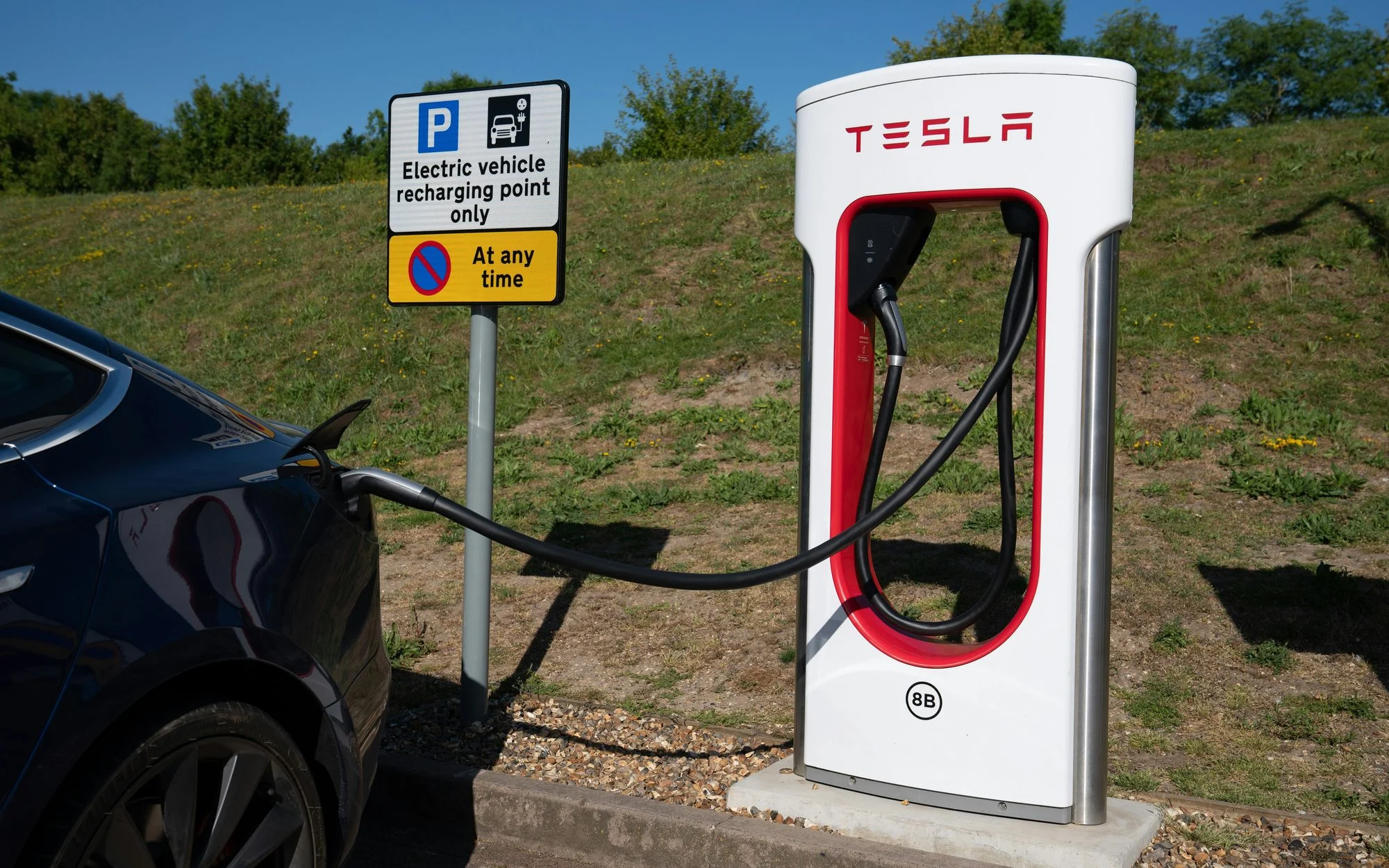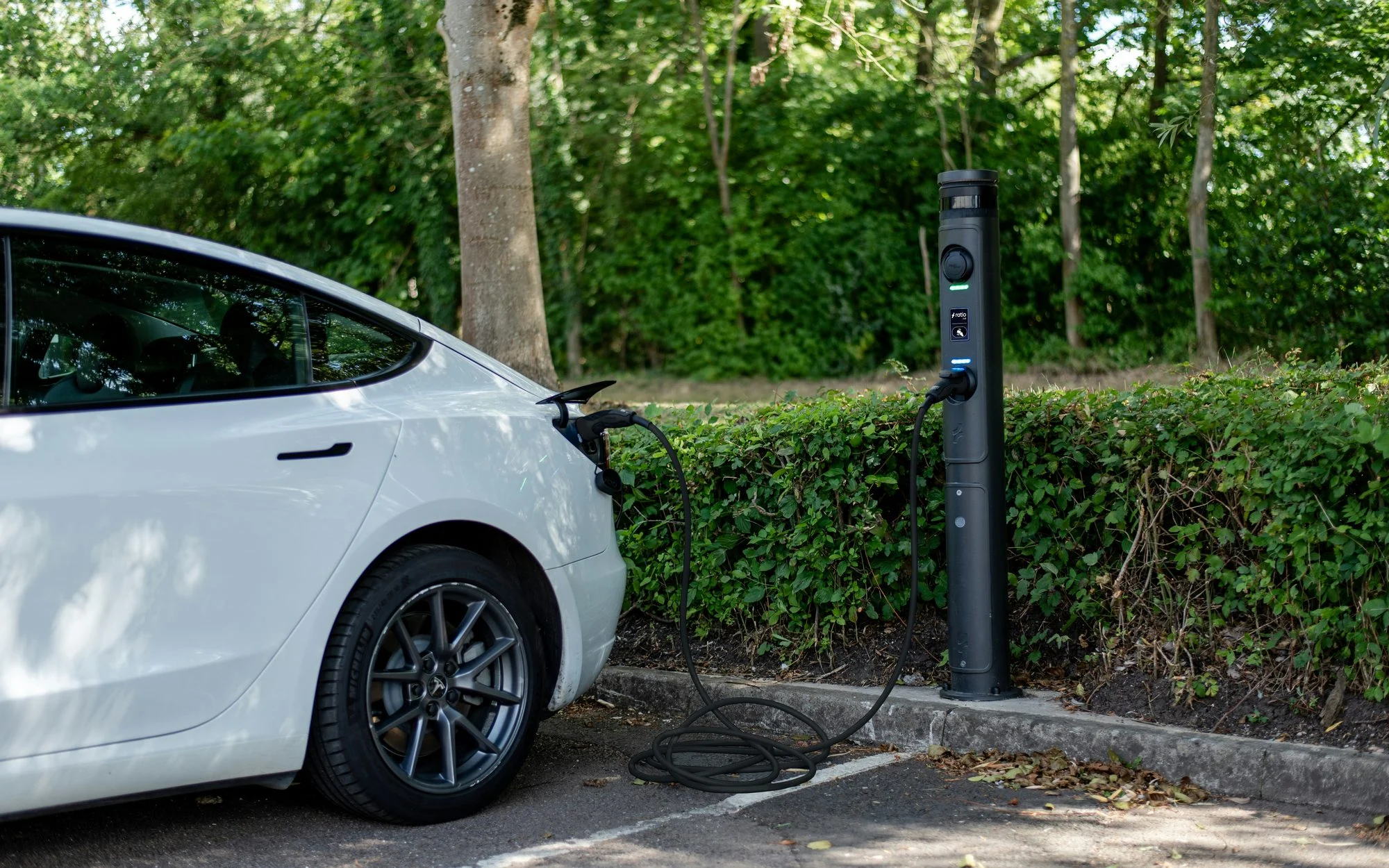
The order confirmation for our Model Y arrived on a Tuesday morning, just after the school run. Delivery is February. My partner read it over my shoulder, said "lovely", and then asked how we were paying for it. I'd been avoiding that question for a fortnight, mostly by looking at wheel options.
We bought our 2019 Model 3 when it was the only car we were changing, so the maths was simple. Things have moved on. We sold the Discovery Sport earlier this year, because once the Tesla arrived the Land Rover spent its days on the drive being expensive and occasionally sheltering the dog from the rain. The plan now is for the Model 3 to keep doing the school run and my partner's commute, and for the Model Y to take over the Yorkshire trips and the camping. With two Teslas on the drive the running costs add up, so I spent an evening with Tesla's finance pages and the gov.uk tax tables. My partner called it the most romantic thing I've done all year. These are my notes, in case you're doing the same sums.
What Tesla offers
Tesla UK offers personal contract purchase (PCP), hire purchase, personal contract hire (a lease) and paying cash. If your employer runs a scheme, salary sacrifice is another route. For the two cheapest cars, Tesla's current offers look like this (as of October 2026, from the Model 3 and Model Y design studios):
Model 3 Rear-Wheel Drive | Model Y Rear-Wheel Drive | |
|---|---|---|
Cash | £37,990 | £44,990 |
PCP over 48 months at 0% APR, 8,000 miles a year | £299 a month after £5,600 down | £349 a month after £6,850 down |
Hire purchase over 60 months at 0% APR | £499 a month after £8,050 down | £599 a month after £9,050 down |
Contract hire over 24 months, 8,000 miles a year | £299 a month | £399 a month |
The 0% deals are for cars ordered before 31 December 2026, with finance applied for by then, and delivered by 31 March 2027. Our February delivery falls inside that window. I did a small celebratory lap of the kitchen.
Why the 0% deal doesn't apply to us
The 0% is only on the Rear-Wheel Drive cars, and we've ordered a Premium. Our Premium Long Range Rear-Wheel Drive is on 2.9% APR, the Long Range All-Wheel Drive cars on 0.9% and Performance cars on 1.9%, with Premium versions of both models from £449 a month on PCP (as of October 2026, Tesla UK).
At 0% there's no reason to pay cash. Tesla's own Model 3 example has a total amount payable of £37,990, the same as the cash price, so you'd be handing over your savings for nothing. At our 2.9% you pay some interest, and it comes down to what your savings earn. If they earn more than 2.9%, borrowing and leaving the savings alone works out cheaper. If they earn less, paying cash wins.
You can try this on your own spec by building a Model Y in Tesla's design studio(referral link) and switching the payment type between cash, PCP, hire purchase and lease. The monthly figure updates as you go, so you can see exactly what the bigger wheels cost you each month. I looked once and put the standard ones back.
PCP, hire purchase or keep the cash
PCP keeps the monthly payment low by leaving a large optional final payment at the end. That payment is the lender's guaranteed minimum value for the car. At the end you can hand the car back with nothing more to pay, part-exchange it, or pay the final sum and keep it (Tesla Financial Services).
The part that rules PCP out for us is the mileage limit. Tesla's examples assume 8,000 miles a year and charge 14p a mile plus VAT over that (as of October 2026). Our friends in Yorkshire are lovely, but they live a long way from the Cotswolds, and we visit often enough that the allowance would be gone by June, before we'd even pointed the car at Cornwall. We'd need a much higher limit from day one, and the monthly payment goes up with it.
Hire purchase has no mileage limit, and the car is yours after the last payment. It costs more each month because nothing is held back until the end: on the Model 3, £499 a month against £299 on PCP. For a car we expect to keep until the boys are old enough to complain about being seen in it, hire purchase is the grown-up option.
Paying cash means no credit agreement, no mileage limit and no paperwork beyond the order. It also leaves the savings account looking like it's been burgled, which is why we haven't decided yet.
The £50,000 line and the tow bar
We want a tow bar for a bike rack. The boys now regard camping without their bikes as a breach of their basic rights, and I'd rather not hear the case for the prosecution all the way down the M5. Adding a tow bar at the factory changes the car tax, which I only found out because I tried to add one.
Electric cars registered from 1 April 2025 pay £10 of vehicle tax in the first year and £200 a year after that. If the list price is over £50,000, there's an extra £440 a year for five years from the second tax payment (gov.uk, as of October 2026). The list price includes options fitted by the manufacturer and ignores any discount.
The Model Y Premium Long Range Rear-Wheel Drive is listed at £49,990, and Tesla's tow bar is £1,350 (both as of October 2026). Ordered together, the car goes over £50,000 and pays £2,200 more tax over five years. That's a lot of money for somewhere to hang four bikes. A tow bar fitted after the car is registered doesn't count, because the list price only includes options fitted by the manufacturer (HM Treasury and DVLA VED guidance).
If your spec is close to £50,000, check this before you confirm the order. The Long Range All-Wheel Drive and Performance models are over the line before you add anything.
Leasing
Contract hire is the most straightforward option. You pay a fixed monthly amount, hand the car back after two years, and never think about what it's worth. For Tesla contract hire cars delivered from 1 April 2025, vehicle tax is included in the monthly payment. Insurance isn't, and you can't buy the car at the end (Tesla contract hire support). We keep cars until they're full of crisps and dog hair, so it isn't for us, but it suits anyone who wants a new car every two years and a predictable bill.
Salary sacrifice, if your work offers it
Salary sacrifice is the option friends ask about most, usually the week their employer sends round an email about it. You lease the car through work, and the payment comes out of your salary before income tax and National Insurance, so it costs you less than the monthly figure suggests.
You then pay company car tax on the car's list price. For electric cars that's 4% in 2026/27, rising to 5% the year after (HMRC). On a car listed at £49,990, like the Model Y we've ordered, that's about £400 a year for a basic-rate taxpayer and £800 for a higher-rate one. Say the lease is £600 a month. A basic-rate taxpayer saves 20% income tax and 8% National Insurance on it, so it costs them about £432. A higher-rate taxpayer saves 40% and 2%, so about £348. Even with the company car tax added, that's hard to beat.
Each leasing company sets its own prices, and many include insurance, servicing and tyres, so compare the whole package rather than the monthly payment. There are downsides. You're tied to your employer for the length of the lease, often two to four years, and leaving early can cost you. A lower salary on paper can also reduce pension contributions and what a mortgage lender will offer, so check with your scheme before you sign.
We didn't go this way, because neither of us had a scheme when we ordered. My partner's office has started one since, which my partner has mentioned twice. Salary sacrifice cars are normally ordered by the leasing company, and Tesla's referral terms exclude business orders. If you're comparing it with buying, the 0% PCP on the Rear-Wheel Drive cars above is the figure to beat. Our post on Teslas as company cars covers the employer side.
What we're doing
We're leaving the tow bar off the factory order and having one fitted once the car is registered. The bikes are coming camping either way.
The money question will be settled when the finance paperwork arrives in the new year. If our savings are earning comfortably more than Tesla's APR on the Premium, we'll take the finance and leave the savings alone. If not, we'll pay outright and enjoy not having a monthly payment.
The other running costs, including insurance, charging and tyres, are in running our Model 3 for a year, against the old Discovery Sport.
As existing owners we get Tesla's loyalty benefit on this order rather than a referral reward. If this would be your first Tesla, ordering a new Model 3 or Model Y through our referral link(referral link) gets you 650 free Supercharging miles (as of October 2026). Use the link before you place the order, because Tesla can't add it afterwards. For us, 650 miles is about one and a half return trips to Yorkshire.