We were somewhere past Mansfield on the M1, on the stretch where the hard shoulder became a fourth lane ten years ago, when we passed a silver estate car in an emergency area with its hazards going. Its family stood in a line behind the barrier in the drizzle with their hoods up.
The younger boy asked what we'd do if we ran out. The elder boy said we'd push it. My partner said nothing for about a mile and then asked whether I knew. I didn't, not properly, and I've had the car for seven years. The dog slept through the whole conversation.
So I started reading at Woodall and finished at home with a spreadsheet nobody had asked for. This is what would happen to a Model 3 with four people and a dog in it, as of October 2026. In short, running out of charge is rare and Tesla never pays for it. A fault on a car under warranty is Tesla's job, and on a car as old as ours it's our breakdown cover's job. Either way a Tesla leaves on a flatbed, and while you wait, the people go behind the barrier and the dog stays in the car.
Who comes for a seven-year-old Tesla
Tesla Roadside Assistance is free while the car is covered by Tesla's warranty or an extended service agreement (Tesla's roadside assistance policy, checked October 2026). In the UK a new car's Basic Vehicle Limited Warranty lasts 4 years or 60,000 miles, whichever comes first (Tesla's UK warranty, effective January 2024). Ours ran out in the summer of 2023. The Model Y arriving in February will have it until early 2031, unless the Yorkshire trips manage 60,000 miles first.
While it lasts, if a warranty fault leaves the car undrivable, Tesla pays to move it up to 500 miles to the nearest Tesla Service Centre. You ask for help under Roadside in the Tesla app (Tesla support, as of October 2026), and if the app isn't playing, Tesla's UK customer support line is 01628 450 660.
It won't pay when the main battery is flat. Tesla will still arrange a tow, at your cost. It also excludes accidents, a 12V battery that has worn out normally, getting the car home after the repair, and, in a list I read twice, "transportation of animals or livestock". The dog took the news calmly.
Four years of it comes with any new Tesla, including the ex-demo cars that turn up in Tesla's new Model 3 and Model Y stock(referral link). For our 2019 car, help would come from the breakdown cover we kept when we sold the Discovery Sport, because it covers us rather than one car.
Running out of charge, which almost nobody does
The boys' worry turns out to be the rare one. The AA says just 1.85% of its electric car call-outs in 2024 were for a car out of charge, down from 8.26% in 2015. The most common electric car faults are the same as on petrol and diesel cars, led by tyres, wheels and the 12V battery (Motoring Research, November 2024).
When someone does run out, the two big clubs differ. The AA said in 2021 that it would tow a flat car to a working charge point, because adding a few miles at the roadside can be dangerous (AA, July 2021). Some RAC vans carry EV Boost, a 5 kW charger that adds about 10 miles in around half an hour (RAC, May 2022). With the boys behind a barrier in the rain, I'd take the tow.
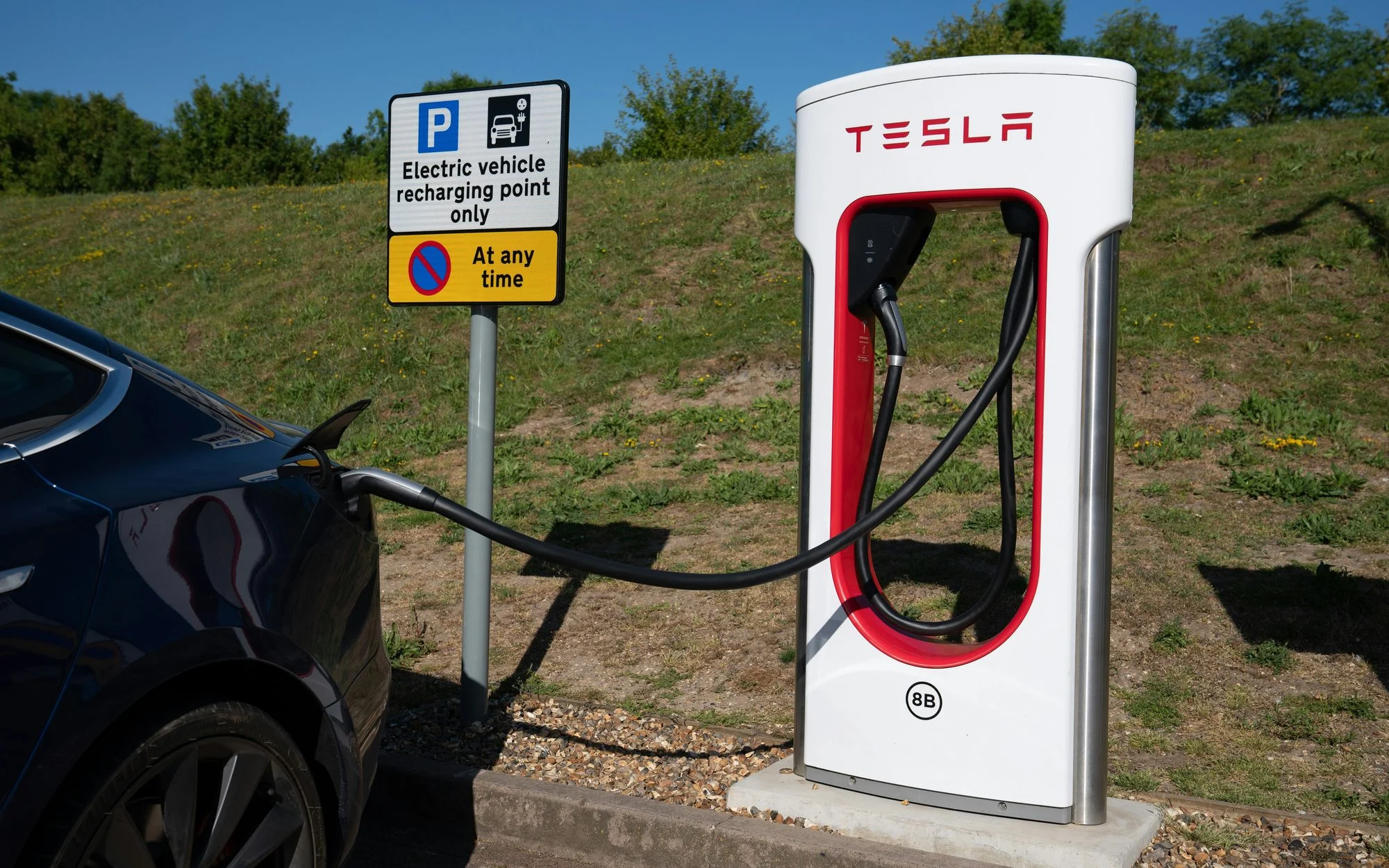
In fairness, the car makes running out quite hard. It plans the stops, and it starts complaining well before the boys do. Our lowest arrival at our usual Supercharger at Woodall was 6% on a January night, and my partner still brings it up.
A Tesla only travels on a flatbed
The motors in a Model 3 generate power whenever the wheels turn, so Tesla says it must always be moved with all four tyres off the ground. Otherwise the drive system can be damaged and overheat, in rare cases badly enough to set nearby parts alight. A flatbed is Tesla's recommended method (Model 3 owner's manual). The RAC's All-Wheels-Up system, which it describes as like having a flatbed in the back of a patrol van, does the same job without waiting for a lorry (RAC, May 2022).
Tesla's policy makes it the owner's job to give the recovery driver the instructions in the Roadside Assistance Guide in the glovebox. Ours was under a stack of parking receipts and a pair of swimming goggles that nobody has claimed since 2022.
Where everyone stands, the dog included
This was the part my partner cared about most. The Highway Code (rule 277) and National Highways call it "Go left". Leave at the next junction or services if you can. If you can't, move into the left lane and stop in an emergency area or on the hard shoulder, as far left as possible, with the hazard lights on. Emergency areas have blue signs with an orange SOS telephone. The bit of the M1 where we passed that family has 20 of them in 20 miles (gov.uk, 2016).
Then everyone gets out through the left-hand doors, if it's safe, and waits behind the barrier, well away from the car. The Highway Code says not to go back to the car "even if it's raining, cold or dark". On the M1 that's most of the year. Use the orange phone, or call National Highways on 0300 123 5000, then your breakdown cover. Don't put a warning triangle out on a motorway (rule 276). If the car stops in a live lane and you can't get out safely, stay in it with your seatbelts and hazards on, and call 999 and ask for the police.
Animals, under rule 277, "MUST be kept in the vehicle or, in an emergency, under control on the verge". So the four of us would stand on a damp bank and the dog would finally get the whole back seat. When the truck comes, the AA says it will always try to take pets in the recovery vehicle, at the patrol's discretion (AA).
The other battery, and what lives in the car now
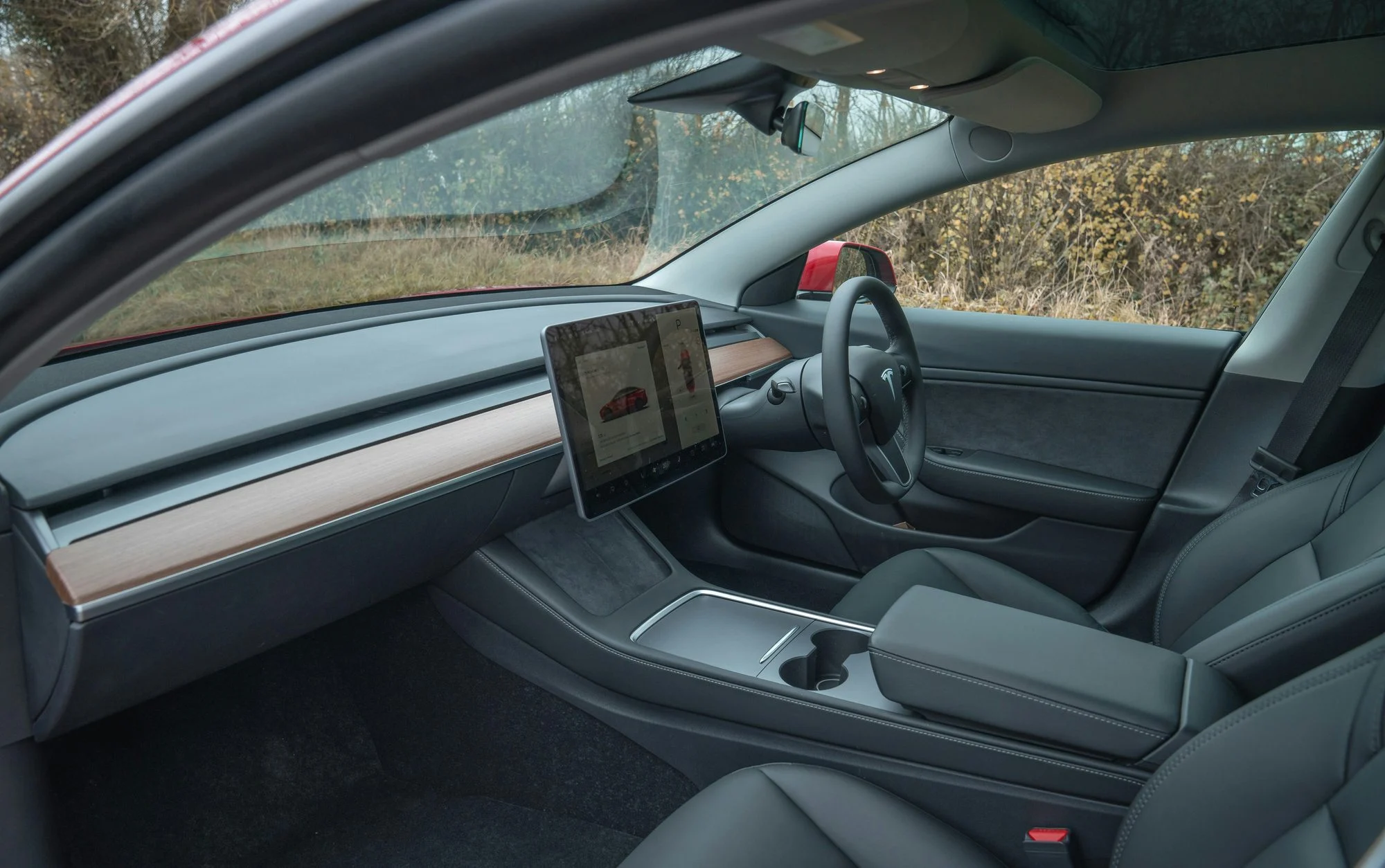
The 12V battery is the one more likely to strand us. It wakes the car and runs the locks and the screen, and when it's flat the car stays shut however much range it has. Tesla's manual explains how to open the frunk by holding a jump pack on two wires behind the tow eye cover in the front bumper, which only releases the latch and doesn't charge anything (Model 3 owner's manual). Ours was replaced in 2022, after the screen told us to book a service, which is one of the checks in our used Model 3 guide.
Since the M1 conversation, this lives in the car:
- four hi-vis vests in the door pockets, so we can put them on before getting out
- coats and an old blanket for the wait behind the barrier
- the Tesla key card and a power bank, in case my phone dies before the car does
- water, and snacks the boys haven't found yet
- the dog's lead
- the breakdown cover's number and Tesla's, written on paper
What I'd tell a friend
Find out who would come before you need them. If your Tesla is under four years old, Tesla Roadside Assistance covers faults, though not running out of charge or the trip home. If it's older, buy breakdown cover that says it handles electric cars and check what it does when one runs flat. Then find the guide in your glovebox before a recovery driver asks for it.
The boys have settled the matter between themselves. The younger one says we'll never run out because the car won't let us. The elder one still thinks we could push it, and I haven't told him what a Model 3 weighs.
If you're buying new and it would be your first Tesla, ordering a Model 3 or Model Y through our referral link(referral link) gets you 650 free Supercharging miles (as of October 2026), which for us is about one and a half return trips to Yorkshire. Use it before you place the order, because Tesla can't add it afterwards.